How to Fix Crooked Teeth — Your Complete Guide
Crooked teeth affect more than your smile — they influence your self-esteem and confidence as you move through the world. There’s solidarity in your struggle if you hide your smile in photos or during conversations. Today’s treatment options make it easier than ever to transform your smile. From Invisalign to cosmetic solutions, many fixes deliver noticeable results within a few visits.
This guide breaks down the most effective ways to straighten crooked teeth so you can choose the option that fits your goals, timeline and budget.
What Causes Crooked Teeth?
There’s no single reason teeth grow in crooked. Genetics, jaw development and even childhood habits can influence how your smile takes shape. Knowing what’s behind the misalignment makes it easier to choose the most effective solution.
- Genetics: Many people inherit their tooth size, spacing and jaw shape from their parents. For example, a smaller jaw often leaves insufficient space for larger teeth.
- Natural aging: Your teeth will subtly move forward throughout your life. Your lower jawbone can narrow slightly as you age, causing front teeth to crowd or overlap.
- Childhood habits: Prolonged thumb-sucking, mouth breathing or tongue thrusting at a young age can put pressure on growing teeth.
- Skipped retainers: Your teeth can gradually move back to their original positions if you stopped wearing your retainer after having your braces removed.
- Untreated dental issues: When you lose a tooth and don’t replace it, neighboring teeth can shift into the gap left behind. Advanced gum disease also damages supporting bone and tissue, causing teeth to drift.
Don’t Wait to Treat Crooked Teeth
Addressing crooked teeth goes beyond your appearance. Overlapping teeth can create tight spaces, allowing plaque and bacteria to accumulate and increasing your risk of tooth decay and gum disease.
Misaligned bites cause some teeth to bear more force than others, leading to premature enamel wear, chips and cracks. An improper bite can also strain your jaw joints, potentially leading to headaches and chronic joint disorders.
A proactive approach offers advantages for patients of all ages. Children and teens who receive early attention can develop jawbones that respond more effectively to orthodontics. Adults with crooked teeth may resolve alignment issues and prevent the need for more complex procedures later. Ultimately, a tailored treatment plan can protect protruding teeth from injury, improve speech clarity and fix bite problems.
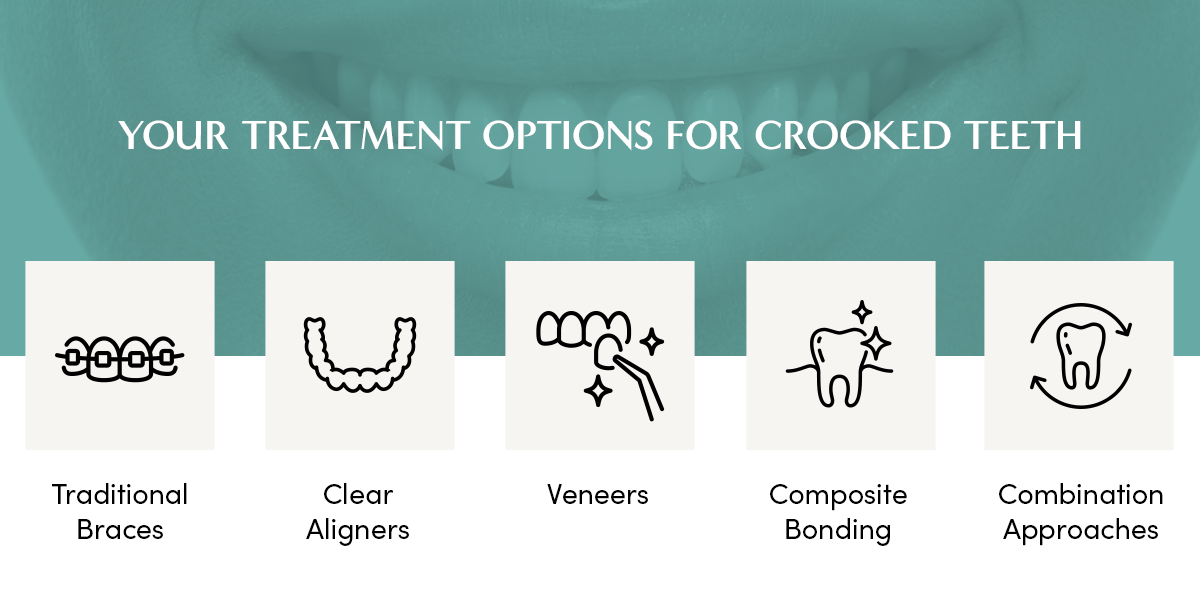
Your Treatment Options for Crooked Teeth
Modern dentistry offers a range of cosmetic and orthodontic solutions for crooked teeth. While orthodontic treatments move your teeth into better positions, cosmetic procedures can improve the appearance of your smile by reshaping or covering teeth. Your choice depends on your preferences and the severity of your misalignment.
Traditional Braces
Conventional braces are highly effective for complex alignment issues. This treatment involves bonding metal brackets to each tooth and connecting them securely with wires, creating a system that applies steady pressure to gradually shift teeth into their correct positions. We partner with an orthodontist and will recommend this option if we determine metal braces are the best treatment option for you moving forward.
Braces work well for severe crowding, large gaps and bite corrections that need precise tooth movement. Most patients pay between $3,000 and $7,000, depending on case complexity.
Treatment can take between 18 to 36 months, though moderate cases take an average of 16.2 months. Because braces adhere to your teeth, they work continuously. However, the brackets and wires are visible and require dietary modifications to avoid damage. They may also cause temporary mouth irritation as you adjust.
Clear Aligners
If you’re looking to fix crooked teeth without braces, ask your dentist or orthodontist if you are a good candidate for clear aligners. With this option, you’ll wear a series of custom-made, removable, transparent trays over your teeth, changing them every week or two.
This technology, which includes solutions like Invisalign® and the Simply Clear® brand, has become increasingly popular among adults seeking an orthodontic alternative to braces. Aligner trays offer several advantages, including an average treatment time of 14.5 months, lower discomfort levels and higher patient satisfaction than traditional braces. They’re practically invisible, and you can remove them for eating and cleaning. Comprehensive Invisalign treatment typically costs between $4,500 and $8,000.
Clear aligners are effective for moderate spacing and crowding issues. The primary requirement is consistent wear. You’ll need to keep the trays in your mouth for 20 to 22 hours daily for optimal results. They’re generally less effective for severe bite corrections or complex tooth rotations.
Veneers
Veneers are one of the fastest ways to transform your smile and fix crooked teeth without moving them. These thin porcelain shells bond to the front surface of your teeth, instantly correcting gaps, chips, discoloration and minor misalignment.
During this procedure, your dentist will remove a small amount of enamel, take impressions and provide you with temporary veneers. Once your custom porcelain veneers are ready, your dentist will permanently affix them to your teeth. Patient satisfaction rates reach 93.3%, and studies show veneer survival rates around 96% after 10 years.
Composite veneers cost between $250 and $1,500 per tooth, while porcelain veneers cost around $1,500 to $2,500 per tooth. They’re durable and highly stain-resistant. As such, they’re a reliable long-term investment for people with discoloration or cosmetic concerns. The trade-off is that the procedure is irreversible, and the up-front cost is significant.
Composite Bonding
Cosmetic bonding uses tooth-colored resin to repair chips, close small gaps and reshape your teeth. This procedure preserves more of your natural tooth structure than veneers.
Your dentist will sculpt the composite resin directly onto the targeted tooth, then harden it with a special light. Most patients pay between $150 and $900 per tooth, making this one of the most affordable cosmetic options.
Bonding works well for minor imperfections and situations where you want to avoid permanent enamel removal. Satisfaction rates for direct composite bonding average around 67%, compared to higher rates for porcelain. Resin can chip more easily than porcelain and may stain over time with coffee or tobacco use.
Bonding can also be a good choice when you want a cosmetic improvement but aren’t yet ready to commit to porcelain restorations. For example, an option that preserves tooth enamel and delays permanent decisions is often the safest approach for younger patients. However, not everyone is an ideal candidate for cosmetic bonding. Schedule an in-person examination and detailed discussion with your dentist to determine whether bonding will meet your goals and fulfill your expectations.
Combination Approaches
A smile makeover might involve straightening your teeth with clear aligners, followed by whitening to brighten your smile and bonding or veneers for a comprehensive result.
This approach provides a complete transformation by addressing structural and cosmetic concerns. For example, if you have moderate crowding and severe discoloration, aligners can correct the spacing while veneers improve the color and shape.
Costs and timelines vary significantly based on which procedures you combine. If you prefer, your customized treatment regimen can involve multiple phases with recovery time between steps.
How to Choose a Treatment for Your Needs
| Treatment | Primary Purpose | Cost | Treatment duration | Best For |
|---|---|---|---|---|
| Braces | Corrects complex alignment and bite issues | $3,000 to $7,000 | Long | Severe crowding, large gaps and bite corrections |
| Clear Aligners | Straightens teeth discreetly | $5,000 to $8,000 | Moderate to long | Mild to moderate spacing and crowding |
| Veneers | Permanent cosmetic upgrade | $250 to $2,500 per tooth | Short | Severe discoloration, chipped teeth and slightly uneven smiles |
| Composite Bonding | Fixes isolated chips, cracks and small gaps | $150 to $700 per tooth | Short | Minor cosmetic fixes and avoiding permanent alteration |
| Combination Approaches | Comprehensive smile transformations | Varies | Varies | Complex structural and cosmetic concerns |
Orthodontic treatment is typically necessary to resolve severe misalignment or bite problems. Bonding or veneers can resolve cosmetic concerns like stains if you already have properly aligned teeth. Clear aligner trays are an effective middle ground if you prioritize discretion and have mild to moderate crowding.
Find Your Path to a Straighter Smile With Maple Dentistry
Your smile transformation starts with understanding your unique needs. Maple Dentistry brings over 30 years of experience and advanced training to every consultation. As a leading dentist in Orlando, Dr. Nadine Ferbinteanu delivers comprehensive care entirely focused on your comfort.
Whether you’re considering clear aligners, veneers or a combination approach, we’ll partner with you to create a personalized treatment plan that fits your goals.
See the results for yourself in our gallery, then call our office or contact us online to schedule your consultation.